ChatGPT and Microsoft Copilot have made powerful AI tools accessible to nearly every business. But for manufacturers, the real challenge isn’t accessing AI. It’s making it work with complex technical information, existing systems, and the people who rely on them.
Building a custom AI solution is another option, but it comes with its own challenges, from development costs and system integration to ongoing maintenance and support.
That’s where Zea Cortex comes in.
Cortex is a purpose-built AI platform for small and medium-sized manufacturers. It combines the power of leading large language models (LLMs) with specialized manufacturing tools, helping businesses make better use of their technical knowledge, resolve problems faster, and improve customer support.
So, why choose Cortex over ChatGPT, Copilot, or an in-house AI solution? Here’s what manufacturers should consider.
At a Glance: Cortex vs. General-Purpose and In-House AI Solutions
| Key Factor |
Cortex
Built for Manufacturing
|
General-Purpose or
Custom AI Solutions ChatGPT, Microsoft Copilot, etc. |
|---|---|---|
| Technical Documentation |
Built-in tools to create and update technical manuals.
|
Limited built-in technical authoring capabilities. |
| Engineering Data Analysis |
Interprets wiring diagrams and hydraulic schematics.
|
Can struggle with complex engineering diagrams. |
| Technical Illustrations |
Creates and modifies consistent technical visuals.
|
Inconsistent visuals and limited standardization. |
| Expert Knowledge Capture |
Captures expertise through structured SME interviews.
|
No structured SME knowledge capture. |
| Human Support Escalations |
Escalates unresolved conversations to support teams.
|
No built-in technical escalation workflow. |
| Customer Conversation Insights |
Identifies equipment issues, trends, and knowledge gaps.
|
Limited equipment-specific insights. |
| Team Collaboration & Access |
Shared workspaces, activity visibility, and RBAC.
|
Limited manufacturing-specific collaboration features. |
| Manufacturing System Integrations |
Agentic API framework for ERP, PLM, and warranty systems.
|
No built-in manufacturing system workflows. |
| Performance |
0.5–10 seconds in reported comparison.
|
1–2 minutes (60–120 seconds) for a custom ChatGPT-based solution in reported comparison. |
| Maintenance & Development |
Maintained and continuously improved by Zea.
|
Ongoing development and maintenance costs. |
Why Manufacturers Choose Cortex Over ChatGPT and Other General-Purpose AI Tools
1. Technical Documentation and Engineering Intelligence
Reliable AI support depends on accurate, complete, and up-to-date technical information. Without it, even advanced AI models struggle to provide correct answers.
Cortex helps manufacturers create, improve, and maintain the technical documentation needed to deliver reliable support.
Technical Documentation Authoring
For manufacturers, keeping technical manuals current can be challenging as equipment evolves, new issues emerge, and product information changes. Missing troubleshooting procedures or outdated instructions can leave critical gaps in the knowledge available to AI support systems.
Cortex includes a dedicated technical documentation authoring environment that helps manufacturers address these gaps, update existing manuals, and develop new technical resources as needed. This makes it easier to maintain the knowledge base that both AI systems and support teams rely on.
AI Image Synthesis and Modification
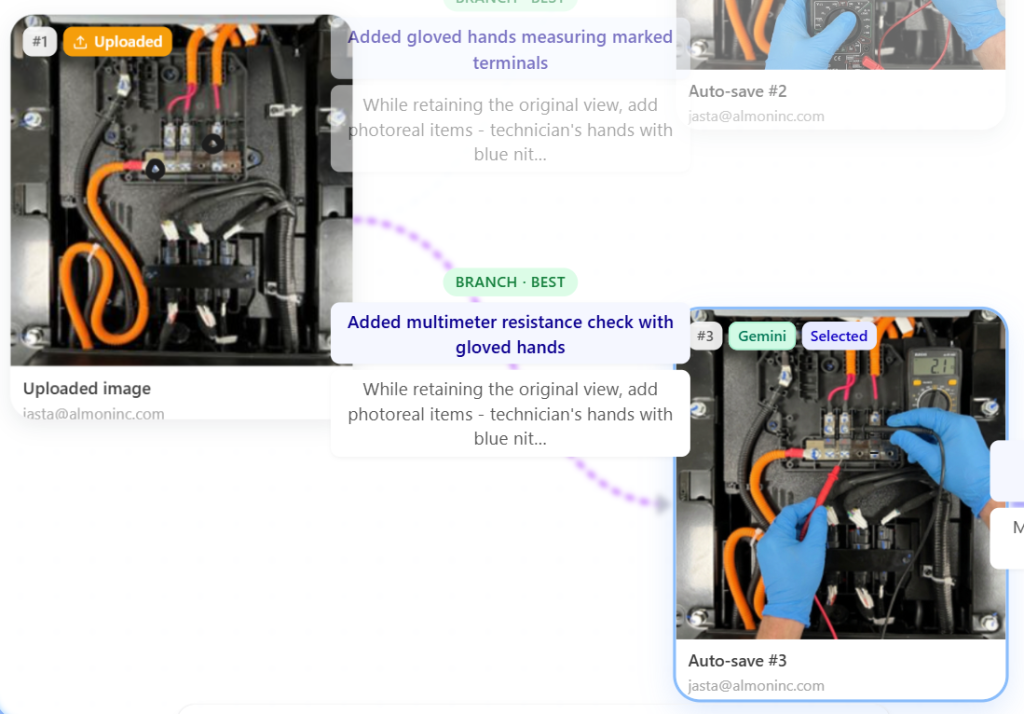
AI tools like Google Gemini can generate and modify images, but maintaining a consistent style across large collections of technical illustrations can be challenging.
Cortex includes an integrated AI image toolbox that helps manufacturers create and modify equipment illustrations and other visuals for technical documentation and AI-powered support conversations.
These tools help maintain visual consistency while reducing the effort required to create and update technical images.
Analysis of Raw Engineering Data
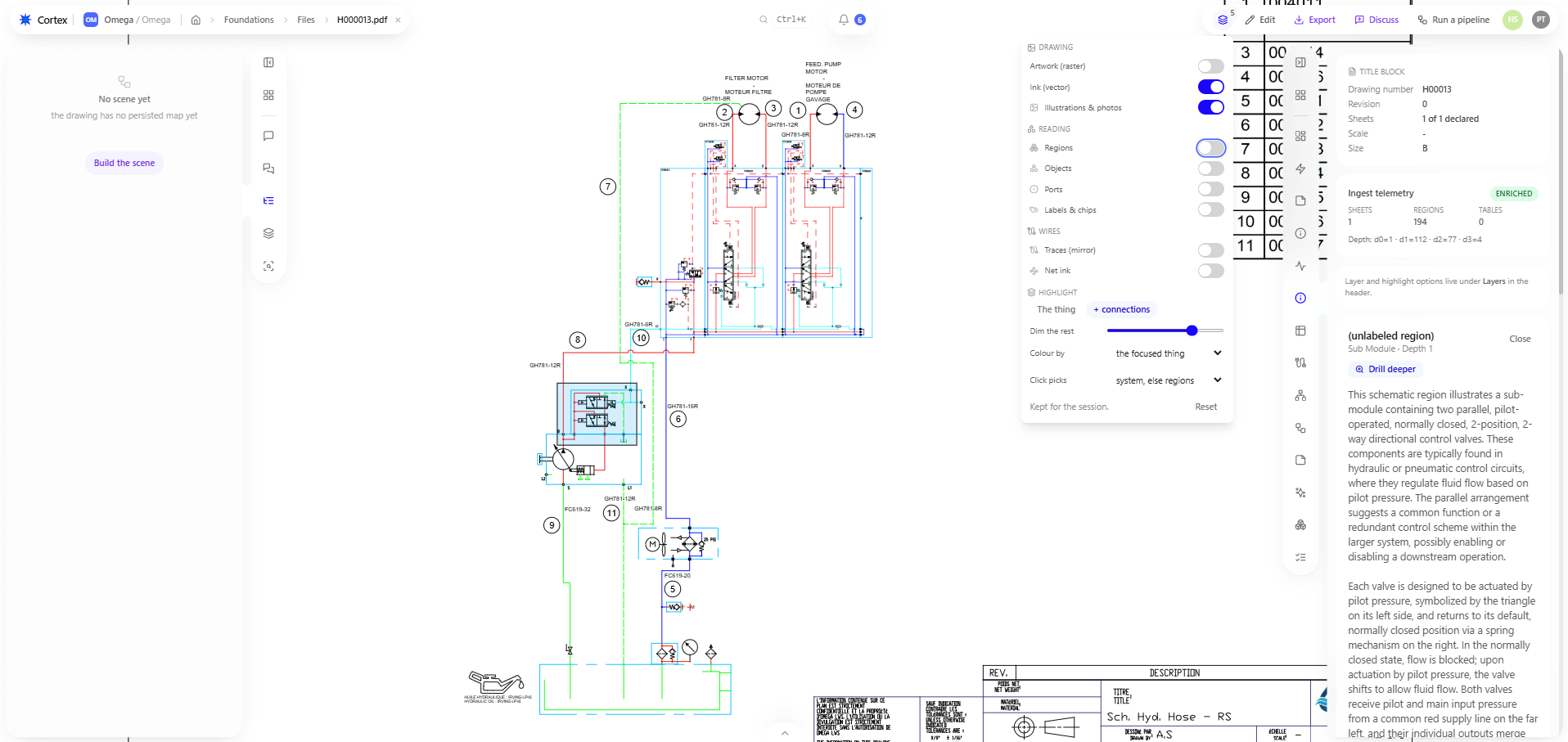
Cortex can analyze raw engineering data, including wiring diagrams and hydraulic schematics, and use it to write a theory of operation that explains how equipment or systems function.
This bridges the gap between up-to-date engineering data and the practical knowledge customers and technicians need to diagnose and resolve problems in the field.
Cortex goes beyond searching existing manuals. It helps manufacturers create accurate technical documentation, develop consistent technical visuals, and turn complex engineering data into practical service knowledge, helping support teams deliver more reliable answers.
2. Tribal Knowledge Capture and Human Expertise
Much of a manufacturer’s technical knowledge resides with experienced technicians and engineers rather than in service manuals. Capturing this expertise is essential for resolving issues that existing documentation doesn’t cover.
Cortex helps manufacturers preserve this knowledge through human support escalations and structured interviews with subject matter experts.
Human Support Escalations
When a general-purpose AI assistant cannot answer a technical question, customers may have to contact support separately and repeat their issue. Repeated dead ends can undermine trust and discourage continued use.
Cortex addresses this by escalating unresolved conversations directly to human support teams, preserving context and helping customers get the assistance they need. These interactions also give manufacturers visibility into unanswered questions and knowledge gaps they can address to improve future support.
Subject Matter Expert (SME) Interviews
Cortex includes a dedicated interview system that captures knowledge from experienced technicians, engineers, and other subject matter experts.
It generates and analyzes interview transcripts to uncover insights missing from the manufacturer’s existing knowledge base.
This expertise can then inform technical documentation and improve customer support, making knowledge previously held by a few individuals accessible across the organization.
Achieving this level of knowledge capture and integration can be particularly challenging with custom solutions built on ChatGPT or Copilot.
Cortex helps manufacturers preserve decades of technical expertise, reduce dependence on individual employees, and ensure valuable knowledge isn’t lost when experienced personnel leave or retire.
3. Conversation Intelligence and Continuous Improvement
Customer support conversations reveal valuable insights into equipment performance, recurring failures, and troubleshooting challenges that engineering and service teams might otherwise miss.
Cortex helps manufacturers turn these insights into opportunities to improve equipment, technical documentation, and customer support.
Data Mining of Customer Conversations
Cortex can search, catalog, and analyze historical customer support conversations to identify recurring technical issues and patterns in equipment failures.
Engineering and service managers can generate reports from these interactions to better understand the challenges customers face in real-world conditions.
These insights help manufacturers identify documentation gaps, address common service issues, and uncover opportunities for product improvement, turning previously buried support knowledge into actionable information.
Manufacturers gain a better understanding of how their equipment performs in the field and can use those insights to improve product reliability, technical documentation, and customer support.
4. Collaboration, Observability, and Access Controls
Manufacturing AI systems need to support collaboration across engineering, technical documentation, service, and customer support teams, with shared access to knowledge and visibility into how it’s used and updated.
Cortex provides a collaborative environment where teams can share knowledge, manage access, and track activities.
Observability and Access Controls
Cortex logs every conversation and action taken within the platform, including activities performed by its AI agents. This gives teams visibility into how the system is being used and what changes are being made.
In a typical homegrown AI solution, access to the backend is often limited to the technical author or developer responsible for maintaining it. Cortex makes these activities visible across the workspace, with role-based access controls (RBAC) to manage permissions.
Collaboration Across Teams
Cortex is built around organizations and shared workspaces, ensuring knowledge, documentation, and collaborative work remain with the organization rather than individual employees.
Engineering, documentation, service, and support teams can contribute to a shared knowledge system and keep information current.
As more teams get involved, Cortex provides the collaboration tools and access controls needed to manage their work without depending on a single technical administrator.
Manufacturers gain a shared, transparent knowledge system where teams can collaborate, track activities, and maintain control over company information.
5. Performance and Manufacturing System Integrations
Two important considerations when developing an AI solution in-house are how quickly it can retrieve technical information and how easily it connects with existing business systems. Both can require considerable development effort, particularly as the volume of data and number of integrations grow.
Performance
ChatGPT-based support solutions typically need to search through archives of technical documentation before generating an answer. Depending on how the system is built, this can result in long response times.
Real-world comparisons reported by Zea have shown a significant difference between a custom ChatGPT-based solution and Cortex when handling the same query.
The custom ChatGPT-based solution took approximately 1-2 minutes to respond, compared to just 0.5–10 seconds for Cortex.
Based on response times reported by Zea for a custom ChatGPT-based solution (1–2 minutes) and Cortex (0.5–10 seconds). The 12× comparison uses the upper end of each reported range (120 seconds vs. 10 seconds). Actual performance may vary depending on the task and configuration.
API Integrations
Cortex provides an agentic API system that supports a wide range of data inputs and outputs, allowing it to connect with other platforms used by manufacturers.
Whether it’s an ERP system, PLM software, or a warranty claims platform, Cortex is built to integrate with existing manufacturing systems rather than operate in isolation.
Developing and maintaining these integrations independently using ChatGPT or Copilot can be time-consuming and risky, adding further complexity to an in-house AI solution.
Faster access to technical information and easier integration with existing manufacturing systems, without the development and maintenance demands of a custom solution.
6. Lower Maintenance Burden and Continuous Development
Building an AI solution in-house is a long-term commitment. Beyond the initial development, manufacturers must consider the cost of maintaining the software, keeping integrations working, and adding new capabilities as their needs evolve.
Cortex removes much of that responsibility by providing a dedicated platform developed and maintained by Zea.
Maintenance and Ownership
Developing a custom AI solution is only the beginning. Maintaining it over several years brings its own challenges, from software updates and troubleshooting to managing integrations and infrastructure.
Over time, ownership and maintenance become increasingly complex, adding another cost to ongoing operations.
With Cortex, Zea takes responsibility for developing and maintaining the underlying platform, allowing manufacturers to focus on using AI rather than managing the software behind it.
Cortex and the Future
Cortex is continuously improved as more manufacturing companies adopt and use the platform. Every customer benefits from the product roadmap being developed and executed by Zea’s dedicated team.
An in-house solution, by comparison, is typically built around immediate requirements. Expanding its capabilities means committing more internal resources to development, testing, and maintenance.
With Cortex, manufacturers benefit from ongoing platform improvements without having to independently develop every new feature.
Planned 3D CAD Visualization
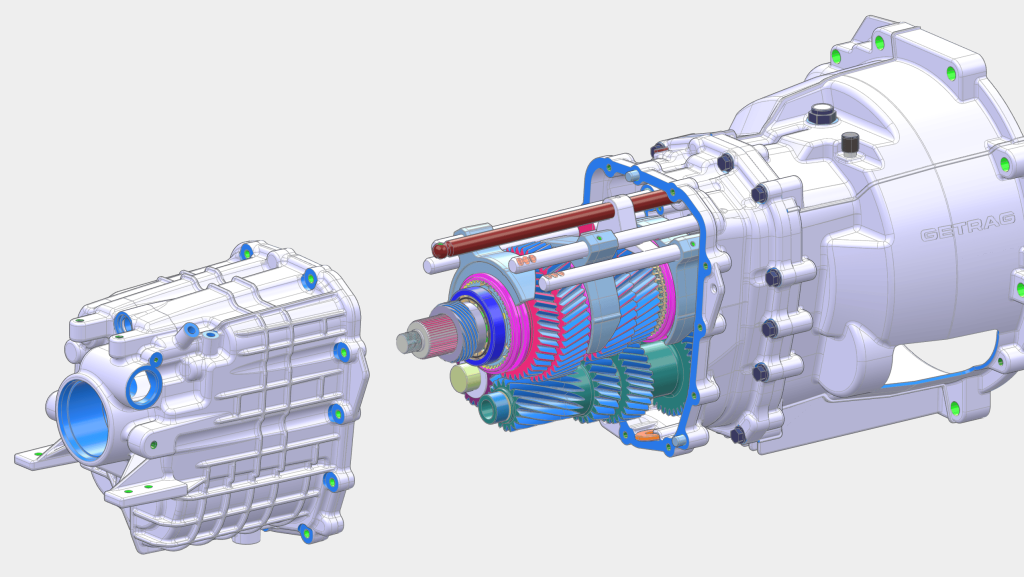
Interactive 3D CAD visualization is a key capability on Cortex’s medium-term roadmap, building on Zea’s existing high-performance, web-based CAD technology.
Once integrated, it is expected to let customers explore complex 3D models during support conversations, identify components, and pinpoint issues without knowing exact part numbers or technical terminology.
This could make troubleshooting more intuitive, especially when customers struggle to identify or describe problematic components.
Cortex reduces the long-term burden of maintaining a custom AI platform while giving manufacturers access to continued development and new capabilities as the technology evolves.
Final Words
Cortex is built specifically for manufacturing, bringing specialized AI capabilities into one platform to help businesses create technical documentation, interpret engineering data, capture expert knowledge, and improve customer support.
Rather than adapting general-purpose AI tools like ChatGPT or Copilot to complex manufacturing needs, or investing time and resources into building and maintaining a custom solution, manufacturers can use Cortex to put their technical knowledge to work, with ongoing development and support from Zea.
See What Cortex Can Do for
Your Manufacturing Business
Discover how Cortex can help your manufacturing business save time, improve efficiency, and work smarter with AI.