“Cortex lightens the burden of offering comprehensive customer service and keeping our manuals up to date. We believe this technology has a great future in manufacturing.”
Arnaud Samson had spent three days working on a 20-page service manual, placing photos and writing out every step by hand — and he still wasn’t finished. As project manager at Omega Liquid Waste Solutions, he had plenty of other, more important work waiting. So he tried something new and handed the draft to Zea Cortex.
“I simply took that document, imported it to Cortex and said, can you make it better? Can you rewrite it and give me something great? And Cortex did it,” he says. “Just for the manual alone, Cortex has been worth it.”
Like many small manufacturers, Omega had no user manuals and nearly all its support knowledge lived with just two people. Now, with Cortex, Omega is turning that knowledge into documentation customers can use on their own, freeing its experts to get back to building products.
- Company
- Omega Liquid Waste Solutions, Lévis, Quebec
- Team size
- 12 employees
- Challenge
- No user manuals, and nearly all support knowledge lived with two people
- Solution
- A Zea Cortex pilot, started in September 2026
- Result
- User manuals, service manuals and maintenance schedules that didn’t exist before
- Next
- A Cortex support agent on Omega’s website within six to 12 months
All support ran through two people
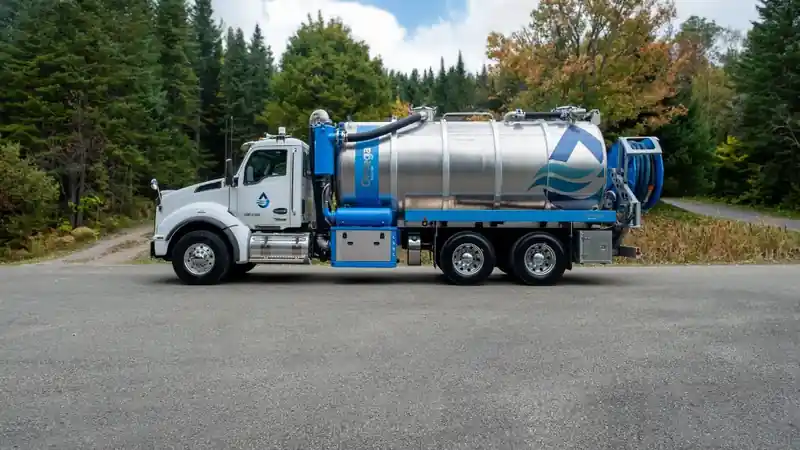
Founded in 1998 in Lévis, Quebec, Omega builds equipment for the liquid waste industry, including a patented filtration system that separates solids from liquids inside the company’s recycler trucks.
The company has only 12 employees and, for years, everything customers needed to know about that equipment sat with two people: Arnaud and Tony Vachon, Omega’s co-founder and vice president of engineering (and the person who designed the filtration system). When customers had questions or concerns, it was up to Tony or Arnaud to pick up the phone. Without any user manuals or other customer-facing documentation, every query became a time-consuming call.
“Tony and I were the two guys with the knowledge of the system,” Arnaud says. “We would spend all this time on customer service, time we could not spend developing the trucks or on new projects.”
Then, in 2026, Omega acquired ExproLink (a maker of litter vacuums and compact sweepers) and the stakes went up. ExproLink had strong documentation, but many of the engineers who knew its products left the company during the transition, so technical questions were going unanswered. According to Arnaud, that was the biggest reason Omega chose Cortex.
A pilot built for a small team
Omega needed a faster way to create customer documentation as well as a way to take routine support questions off its experts’ plates. ExproLink needed to unlock the knowledge already sitting in its technical documents. Cortex does both from one platform. It reads technical documents, understands how products are built from their bills of materials (BOMs), and uses that knowledge to write documentation and power AI support agents.
Omega went first, largely because building a knowledge base is a lot easier with someone like Arnaud who knows the products well — exactly the expertise ExproLink had lost. Once the approach was proven on Omega’s equipment, ExproLink would follow.
The pilot started in September 2026 with weekly onboarding sessions between Arnaud and the Zea team. The first week covered the interface, the second covered BOM imports and each session after that introduced a new tool.

“The guys are very flexible,” Arnaud says. “They spend time with you to show you around the workspace and make sure you understand how to do it the right way.”
Building the knowledge base
Arnaud started the pilot by building the knowledge base that Omega’s future documentation and customer support agent will draw on. He set up the recycler truck in Cortex, then imported hydraulic diagrams, electrical schematics and BOMs. From there, he started writing articles: short reference pieces on common service cases, which Cortex links to the right part numbers and diagrams.
“I open a chat box in Cortex, write some key points and short paragraphs, and say, ‘Hey Cortex, make an article from this.’ And it essentially writes itself,” he explains.
Arnaud reviews each draft paragraph by paragraph, adding or clarifying information until it’s right. So far, he has written about a dozen articles, covering topics like recurring hose reel issues and the differences between Omega’s various product lines. Most articles take just a few minutes. Even the largest, most detailed ones are done in under an hour.
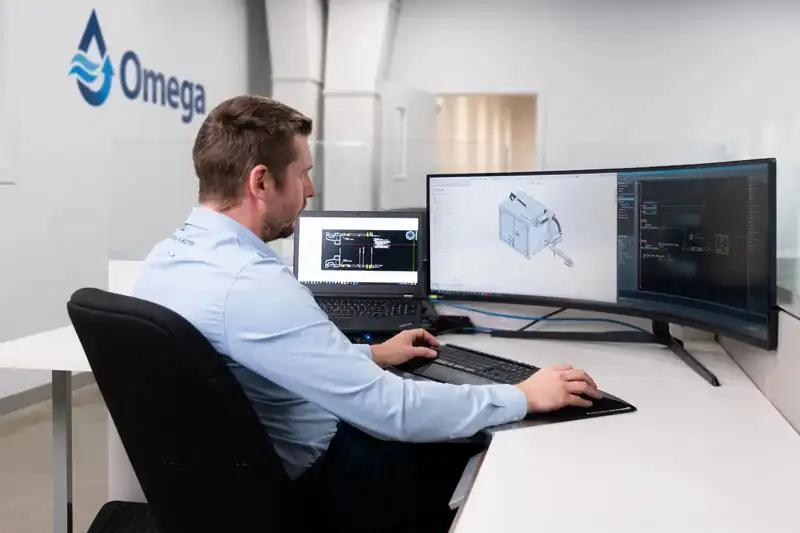
A few weeks in, he gave Cortex a bigger test: the 20-page service manual. Cortex reordered the steps so the overall process flowed more logically, added warnings and filled in missing detail. Using Cortex’s image tools, Arnaud also improved older photos that weren’t up to standard.
A partner that listens
Like any pilot, Omega’s had a few bumps. At first, its enterprise resource planning system exported BOMs in a format Cortex couldn’t read, so Arnaud had to reformat spreadsheets by hand. He raised the issue and Zea quickly updated Cortex to read BOMs as they are, with no special formatting required.
“I told them it was time-consuming for me, and they fixed it,” says Arnaud. “It just shows that they really back their products. I see how they spend their time on updates, working around your comments to make the product even better.”
He can also reach the Zea team through a chat box inside Cortex, and they respond fast. For a small company adopting a new tool, that kind of support matters.
From documentation to AI-supported service
Just over a month in, Omega’s pilot is already paying off. The company is producing user manuals, service manuals and maintenance schedules that simply didn’t exist before, finally giving customers a reliable source of technical information.
“Being able to write documentation fast and reliably with Cortex is one of the biggest benefits for us right now,” Arnaud says.
ExproLink is now in the onboarding phase, with Arnaud sitting in on those sessions as the team brings its BOMs and build guides into Cortex.
“Once Cortex has all this knowledge of the products, they’ll essentially have the equivalent of an engineer at the keyboard,” he says.
Next, Omega plans to launch a Cortex support agent on its website within six to 12 months. Customers will be able to enter their truck’s serial number to see its service history and find the right documentation for their model. When a complex case comes in, Arnaud will handle it himself, then feed the solution into Cortex so the agent keeps learning.
Jump in, but come prepared
For other manufacturers weighing a similar pilot with Cortex, Arnaud’s advice is straightforward.
“I wish I had known about Cortex earlier,” he says. “I would encourage others to jump in and work with Cortex and the Zea team. Just make sure you have your BOMs and know your products well before going in, because you’re the reference.”